Australia Enters the Era of "Responsible Energy Storage"
Pytes Responds to Emerging Industry Trends with Safe Architecture, Full Lifecycle Responsibility, and Localized Service
As Australia's energy transition continues to accelerate, Battery Energy Storage Systems (BESS) are evolving from supplementary renewable energy equipment into critical infrastructure that supports grid stability and energy resilience. Alongside the rapid expansion of the industry, the focus of Australia's energy storage market is also undergoing a profound shift. The industry conversation is moving beyond simply "how much storage can be deployed" toward a more important question: "how can energy storage be developed responsibly?"
The recently held Responsible BESS Development Summit 2026 further underscored this industry shift by highlighting key topics such as responsible BESS development, decommissioning responsibilities, battery fire safety, and noise management. These discussions signal that Australia’s energy storage industry is officially entering a new era of "Responsible BESS" — one centered on safety, compliance, and long-term accountability.
From Product Safety to System-Level Responsibility: Safety-First Design Is Moving Upstream
Among the many topics discussed at the Responsible BESS Development Summit 2026, safety remained at the center of industry attention. As energy storage projects continue to scale, the industry is increasingly reaching a consensus: true safety is not defined solely by the performance of individual components, but by the strength of the overall system architecture and engineering design behind them.
The concept of Responsible BESS emphasizes building multi-layer safety protection mechanisms from the very beginning of project design, while establishing a complete safety framework covering thermal management, risk isolation, operational monitoring, and emergency response.
Pytes has consistently adhered to a system-level safety philosophy in its product development approach, continuously strengthening intrinsic safety and multi-layer protection capabilities across its product architecture. Its full product portfolio is built on Lithium Iron Phosphate (LFP) battery chemistry, combined with highly consistent cell management, intelligent module-level BMS monitoring, and multi-layer electrical protection mechanisms to enable real-time operational monitoring and risk warning capabilities.
At the same time, Pytes continues to optimize system thermal management and modular architecture design, helping energy storage systems maintain long-term stable operation even under complex operating conditions.
Certification Standards Evolve: From "Market Access" to "Trust Infrastructure"
Responsible BESS emphasizes not only product-level safety and compliance, but also verifiability, traceability, and long-term reliability throughout the entire project lifecycle. This means energy storage manufacturers are expected to go beyond meeting basic certification requirements. They must also demonstrate the ability to maintain compatibility with mainstream system ecosystems, comply with local regulations and standards, and support stable long-term system operation.
During the product development phase, Pytes consistently aligns with international safety and grid-connection standards, while actively advancing compatibility testing and system validation with leading inverter brands. Through a "certification-first" development strategy, Pytes helps partners reduce system integration risks, improve project delivery certainty, and establish a stronger foundation for financing, grid connection, and long-term operation. Its core products have successfully passed internationally recognized safety tests such as IEC 62619 and UL 9540A, and are listed by the Clean Energy Council (CEC), significantly streamlining project approval processes.
Localized Support: A Critical Capability Behind Responsible BESS
One of the key topics highlighted at this year's summit—decommissioning responsibility—also reflects a broader shift in Australia's energy storage industry, from a construction-driven approach toward a lifecycle-oriented framework. This transition indicates that modular design capability, system maintainability, localized technical support, and long-term service capability will increasingly become core competitive advantages for energy storage providers in the future.
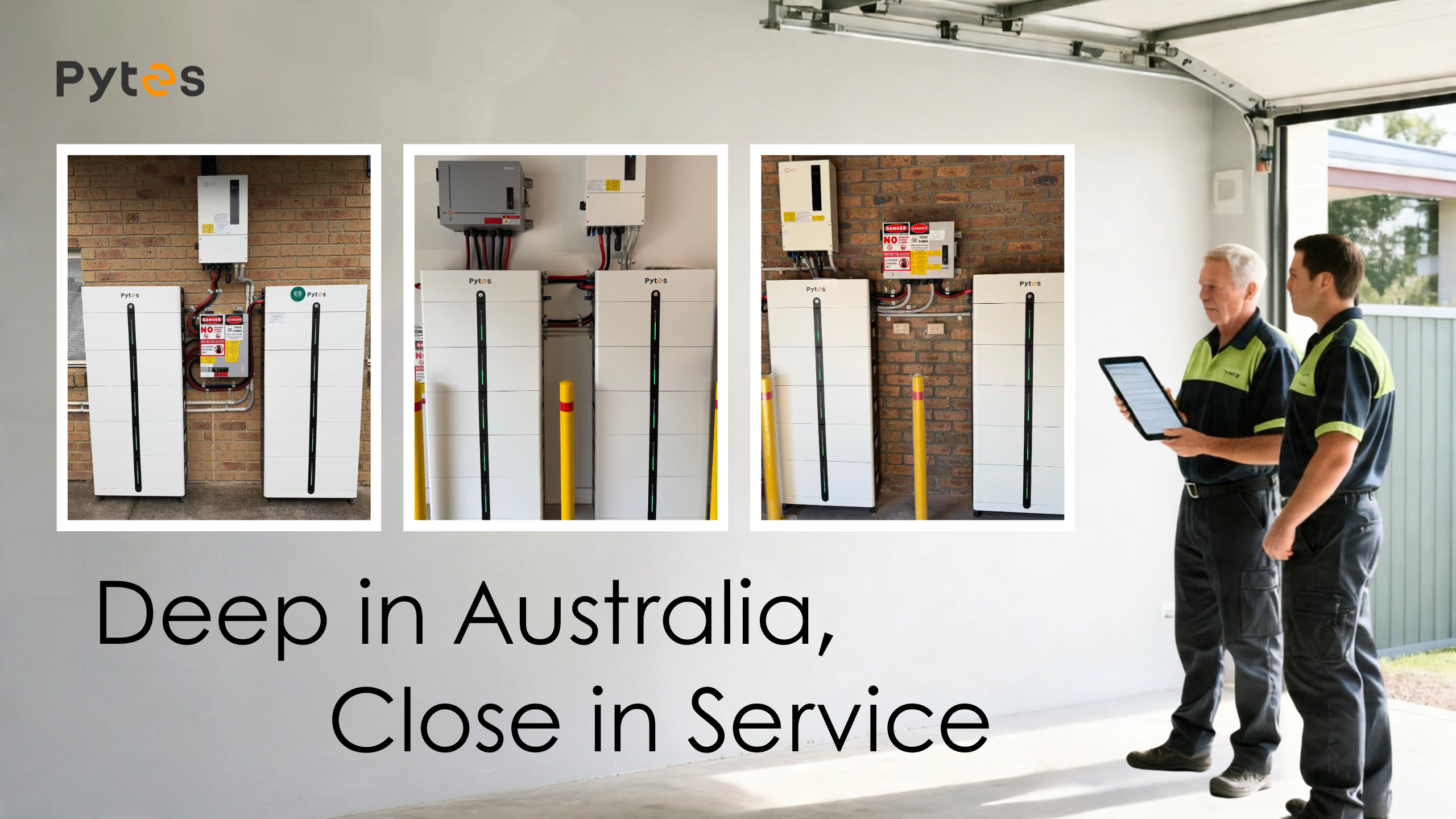
To this end, Pytes continues to strengthen its localized service infrastructure in Australia, providing on-site commissioning support, installation training, system integration assistance, and ongoing technical response for customers and installers. Through closer collaboration aligned with local market needs, Pytes helps projects achieve stable operation more quickly while reducing long-term operational and maintenance risks. To learn more about our localized services, please click here: http://Pytes AU-Energy Storage Battery-Home Battery Storage System
Responsible BESS: Set to Become the New Standard for Australia's Energy Storage Industry
Australia's energy transition continues to accelerate, but the competitive logic of the energy storage industry has already undergone a profound shift. In the future, the market will no longer focus solely on "how large the storage capacity is." Instead, greater attention will be placed on whether systems can deliver long-term operational stability, meet community and regulatory requirements, maintain a robust safety framework and localized service capability, and truly assume full lifecycle responsibility.
As a global energy storage solutions provider, Pytes will continue to deepen its presence in the Australian market. With safer system architecture, more comprehensive localized support, and a long-term Responsible BESS philosophy, Pytes is committed to helping Australia build a more stable, sustainable, and trusted future energy ecosystem.
Reference Article:https://secure.enhar.com.au/