What Does 6000+ Cycle Life Really Mean for a Home Battery?
Learn what 6000+ cycle life really means for a home battery. Discover how battery cycles affect lifespan, performance, and long-term value, and why LiFePO₄ batteries like the Pytes V5°α Plus are designed for long-lasting residential energy storage.
Learn what 6000+ cycle life really means for a home battery. Discover how battery cycles affect lifespan, performance, and long-term value, and why LiFePO₄ batteries like the Pytes V5°α Plus are designed for long-lasting residential energy storage.
When comparing home energy storage systems, battery capacity often gets the most attention. However, one specification has an even greater impact on long-term performance and return on investment: cycle life.
Premium lithium batteries frequently advertise 6,000+ cycles, but many homeowners are unsure what this number actually represents. Does it mean the battery will last for 6,000 days? Will it suddenly stop working after reaching that number? Or is it simply a marketing claim?
The truth is that cycle life is one of the best indicators of a battery's durability and long-term reliability. Understanding this specification can help you compare different battery technologies and choose an energy storage solution that delivers lasting value.
In this article, we'll explain what 6,000+ cycle life really means, what affects battery lifespan, and why modern LiFePO₄ batteries, such as the Pytes V5°α Plus LFP Battery, have become the preferred choice for residential solar energy storage.
What Does 6000+ Cycle Life Really Mean for a Home Battery?
Choosing a home battery isn't just about selecting the largest capacity or the lowest price. Since a residential battery is expected to operate every day for many years, its lifespan directly influences the total cost of ownership.
Cycle life measures how many complete charging and discharging cycles a battery can perform before its capacity gradually decreases to a specified level. Rather than focusing on short-term performance, cycle life provides a clearer picture of how well a battery will perform over many years of continuous operation.
For homeowners planning to install a rooftop solar system or backup power solution, understanding cycle life is essential for making an informed purchasing decision.
What Is Battery Cycle Life?
A battery cycle refers to one complete charging and discharging process.
For example, if a battery is charged from 20% to 100% and later discharged back to 20%, that process equals one complete cycle.
Many people mistakenly believe that plugging the battery into a charger once counts as one cycle. In reality, cycle life is based on the total amount of energy flowing into and out of the battery.
For example:
Two 50% discharges equal one complete cycle.
Four 25% discharges also equal one complete cycle.
Partial charging and discharging accumulate over time until they equal one full cycle.
This definition is important because most residential batteries rarely experience complete 100% discharge every day. Instead, they operate through many partial charging and discharging events depending on household electricity consumption and solar generation.
What Does "6000+ Cycles" Actually Mean?
A battery rated for 6,000+ cycles does not suddenly stop working after completing its 6,000th cycle.
Instead, the rating indicates that under standardized testing conditions, the battery is expected to retain a significant portion of its original capacity—typically around 70% to 80%, depending on the manufacturer's testing criteria—even after completing more than 6,000 full charge and discharge cycles.
As batteries age, all rechargeable chemistries gradually lose capacity. This is a natural process caused by chemical changes inside the cells.
A high cycle-life battery simply slows this aging process, allowing it to deliver reliable performance for a much longer period.
For homeowners, this means the battery continues to provide useful energy storage long after thousands of charging cycles, although the total amount of stored energy gradually decreases over time.
How Long Does 6000 Cycles Last?
Cycle life becomes much easier to understand when converted into years of everyday use.
If a residential battery completes approximately one full cycle every day, a 6,000-cycle battery can theoretically operate for more than sixteen years.
However, many households do not use one complete cycle every day. Solar production changes with the seasons, and household electricity consumption also varies.
As a result, many residential battery systems operate at less than one full cycle per day, extending their practical service life even further.
For homeowners investing in long-term energy independence, this extended lifespan is one of the most valuable characteristics of a high-quality LiFePO₄ battery.
Why Cycle Life Matters More Than Initial Price
Many buyers compare batteries primarily by their purchase price.
While upfront cost is certainly important, it represents only part of the total investment.
A battery with a lower purchase price but significantly fewer charge cycles may require replacement much sooner than a battery designed for long-term operation.
Over the lifetime of a residential solar system, replacing batteries can become one of the largest maintenance expenses.
A battery with a longer cycle life spreads its investment across many more years of daily operation, making it a more economical solution despite a potentially higher initial cost.
This is why professional installers often encourage homeowners to evaluate battery lifespan rather than purchase price alone.
What Factors Affect Battery Cycle Life?
Although manufacturers provide cycle-life ratings based on standardized laboratory testing, real-world battery lifespan depends on several operating conditions.
Battery Chemistry
Battery chemistry has the greatest influence on cycle life.
Traditional lead-acid batteries generally provide far fewer charging cycles than modern lithium batteries.
Among lithium technologies, Lithium Iron Phosphate (LiFePO₄) has become one of the most durable chemistries available for stationary energy storage.
Its stable crystal structure allows repeated charging and discharging with minimal internal degradation, making it particularly suitable for residential solar applications.
Depth of Discharge (DoD)
The deeper a battery is discharged during each cycle, the greater the stress placed on its internal materials.
Modern battery management systems carefully control discharge limits to maximize usable capacity while helping extend overall battery life.
Operating Temperature
Temperature also plays a major role in battery aging.
High temperatures accelerate chemical reactions inside battery cells, increasing long-term degradation.
Extremely low temperatures can reduce charging efficiency and temporarily affect battery performance.
Batteries designed with wide operating temperature ranges and intelligent thermal management generally maintain more stable long-term performance.
Charging and Discharging Current
Charging a battery too quickly or repeatedly operating at very high current levels generates additional heat, which can increase battery wear over time.
Advanced battery systems balance charging speed with long-term durability to achieve optimal overall performance.
Why LiFePO₄ Batteries Offer Longer Service Life
Not all lithium batteries deliver the same lifespan.
LiFePO₄ batteries have become the preferred technology for residential energy storage because they prioritize stability, safety, and durability rather than maximum energy density.
Compared with many conventional lithium-ion batteries, LiFePO₄ technology offers:
Excellent thermal stability
Lower chemical degradation
Better resistance to repeated cycling
Consistent long-term performance
Improved operational safety
These characteristics make LiFePO₄ batteries particularly well suited for solar energy systems that charge and discharge almost every day.
Instead of focusing only on storing more energy in a smaller space, LiFePO₄ technology is engineered to provide dependable performance over many years of continuous operation.
How the Pytes V5°α Plus Delivers Long-Term Reliability
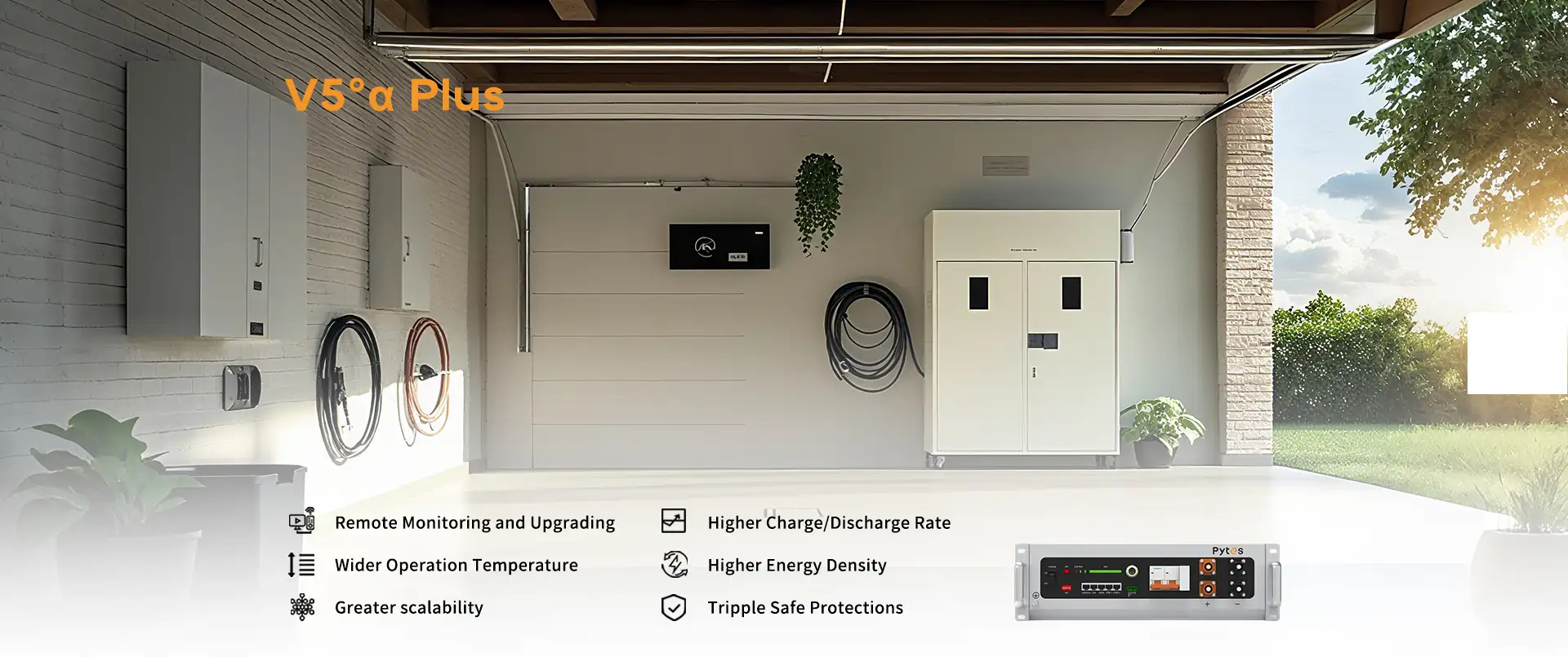
The Pytes V5°α Plus LFP Battery is designed around the advantages of LiFePO₄ technology.
Its advanced battery management system continuously monitors cell voltage, temperature, current, and overall battery health to maintain safe and efficient operation.
Key specifications include:
51.2V nominal voltage
100Ah capacity
5.12kWh energy storage
≥95% round-trip efficiency
≥6,000 cycle life
10-year warranty
Rather than simply maximizing short-term performance, the battery is engineered to provide consistent operation throughout years of daily charging and discharging.
For homeowners, this means greater confidence that the battery will continue supporting their solar energy system well into the future.
Is a 6000+ Cycle Battery Worth the Investment?
For most residential solar installations, the answer is yes.
A home battery is a long-term investment that should continue operating reliably throughout much of the solar system's lifetime.
Choosing a battery with a high cycle-life rating reduces the likelihood of early replacement, lowers long-term maintenance costs, and improves the overall return on investment.
While capacity and power output remain important considerations, cycle life often determines how much value homeowners ultimately receive from their battery storage system.
A battery designed for more than 6,000 cycles provides the durability needed for years of reliable residential energy storage.
Conclusion
Cycle life is much more than a number listed on a specification sheet—it is one of the clearest indicators of a battery's long-term quality and value.
A 6,000+ cycle rating represents years of dependable charging and discharging, helping homeowners maximize the benefits of their solar investment while minimizing replacement costs.
Built with advanced LiFePO₄ chemistry, intelligent battery management, and a design focused on durability, the Pytes V5°α Plus LFP Battery is engineered to deliver reliable residential energy storage over the long term.
When comparing home batteries, don't focus only on today's capacity or price. Consider how the battery will perform after thousands of charging cycles—because long-term reliability is what truly determines the value of an energy storage system.