What Makes a Residential Battery System Reliable in the Australian Market?
A residential battery system designed for the Australian market must satisfy more than basic energy storage requirements.
A residential battery system allows Australian homeowners to store electricity generated by rooftop solar panels and use it when household energy demand increases or solar generation decreases. With growing interest in energy independence, electricity cost management, and backup power, home battery storage has become an important part of modern residential energy systems.
However, purchasing a residential battery system involves more than comparing storage capacity and battery prices. Australian homeowners, solar installers, and energy distributors must also consider product certification, electrical safety, installation requirements, inverter compatibility, and long-term system reliability.
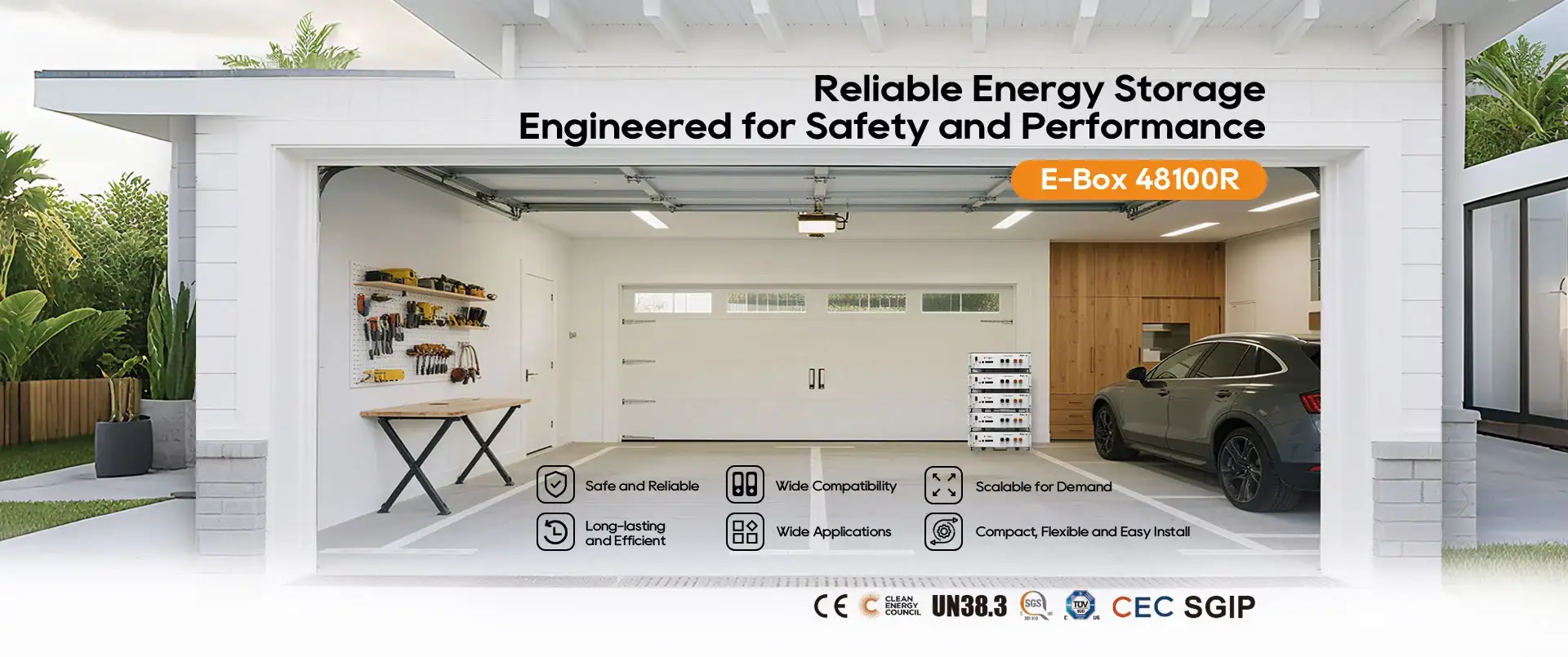
For manufacturers supplying the Australian market, compliance with applicable Australian standards and Clean Energy Council (CEC) product approval requirements is essential. This article examines the key considerations for residential battery systems, with particular attention to Australian installation practices and regulatory expectations.
Australian Standards and CEC Approval for Residential Battery Systems
Compliance is one of the most important considerations when supplying residential battery systems to the Australian market. Battery products must meet relevant safety requirements, while the complete installation must comply with applicable electrical standards and local regulations.
For manufacturers and suppliers, understanding the distinction between product approval and installation compliance helps avoid problems during product registration, distribution, and project delivery.
CEC-Approved Battery Products and Market Access
The Clean Energy Council (CEC) maintains an Approved Products List covering eligible battery storage products and inverters. Products included on the list have undergone assessment against relevant safety and industry requirements, helping installers and consumers identify suitable equipment for the Australian market.
For residential battery system manufacturers, CEC approval is an important commercial consideration. Several Australian government incentive programs and electricity network requirements rely on products appearing on the relevant CEC approved lists. The federal Cheaper Home Batteries Program, for example, requires eligible battery systems and inverters to be accredited and listed at the time of installation.
It is important to distinguish CEC product listing from independent product certification. Battery products must undergo the relevant testing and certification processes through appropriately accredited certification bodies before meeting the applicable listing requirements. Manufacturers should maintain accurate technical documentation and ensure that the exact product model supplied matches its approved listing.
Australian Battery Safety Standards and Installation Requirements
Residential battery systems supplied to Australia must account for several technical standards. AS/NZS 5139 covers the electrical installation safety of battery systems used with power conversion equipment, while AS/NZS 3000 provides the general electrical installation requirements.
SA TS 5398:2025 introduces specific safety requirements for electrical energy storage equipment. Published in October 2025, it is replacing the earlier Battery Safety Guide used in the CEC battery approval process. The CEC is transitioning its approved product requirements to the new technical specification.
Grid-connected residential battery systems must also consider AS/NZS 4777.1:2024, which addresses installation requirements for energy systems connected through inverters. In addition, installers need to follow relevant state and territory electrical safety regulations.
These requirements are not simply documentation matters. They influence product design, battery enclosure protection, electrical connections, installation locations, and system integration. Manufacturers should therefore consider Australian compliance requirements during product development rather than treating them as a final-stage approval task.
Residential Battery System Design for Australian Homes
A residential battery system must match the household's energy consumption patterns, solar generation capacity, and electrical infrastructure. Australian homes have different electricity demands depending on household size, climate, heating and cooling equipment, and daily usage habits.
Battery Capacity and Household Energy Demand
Battery capacity determines how much electrical energy can be stored for later use. It is generally measured in kilowatt-hours (kWh), while the battery's power output is measured in kilowatts (kW).
These two ratings serve different purposes. Capacity determines how long a battery can supply energy, while power output determines how much electrical load it can support at a particular moment.
For example, a household with substantial evening electricity consumption may need greater usable storage capacity than a household that uses most of its electricity during daylight hours. Air conditioning, electric hot water systems, cooking equipment, and electric vehicle charging can also influence battery requirements.
When designing a residential battery system, manufacturers and installers should distinguish between nominal capacity and usable capacity. The latter represents the energy available for household use within the battery's permitted operating range.
Solar Inverter Compatibility and System Integration
Compatibility between the battery, inverter, and existing solar installation is essential for reliable operation. Some residential battery systems use hybrid inverters that manage both solar generation and battery storage, while AC-coupled systems use a separate battery inverter.
The appropriate configuration depends on whether the property has an existing solar PV system, whether the inverter needs replacement, and how the battery will interact with the household electrical supply.
Manufacturers should provide clear compatibility information, supported inverter configurations, communication protocols, and electrical connection requirements. For Australian installations, inverter compliance and grid connection requirements must also be considered alongside battery product approval.
Backup Power and Energy Management
Some residential battery systems support backup power during grid outages, allowing selected household circuits to continue operating. However, backup functionality is not automatically included in every battery configuration.
The backup inverter's rated output, surge capacity, changeover arrangements, and supported electrical loads determine which appliances can remain operational during an outage.
Energy management functions are also important. Intelligent monitoring can help households track solar generation, battery charging, electricity consumption, and grid imports. Certain grid-connected systems can also support virtual power plant (VPP) participation when their inverter and communication capabilities meet the relevant requirements.
Installation and Safety Considerations for Residential Battery Systems in Australia
Even a battery product that meets the relevant certification requirements can create safety risks if installed incorrectly. Residential battery system installation must account for the property's layout, environmental conditions, electrical infrastructure, and manufacturer instructions.
Battery Location and Environmental Protection
Installation location has a direct impact on battery safety and service life. Australian installation requirements address factors such as ventilation, separation from openings and habitable areas, mounting surfaces, and access for maintenance.
Battery systems should also be protected from direct sunlight, excessive heat, moisture, and vermin. Direct solar exposure can increase operating temperatures and accelerate battery degradation, while vermin-damaged wiring can create electrical hazards. NSW electrical safety guidance specifically highlights these installation risks.
Manufacturers should provide clear installation manuals covering environmental limits, mounting requirements, enclosure protection, and maintenance access. Installers must assess the actual site and confirm that the proposed location complies with the applicable Australian standards.
Electrical Protection and Installation Safety
Electrical protection is another essential part of residential battery system installation. The system should incorporate suitable isolation devices, overcurrent protection, protective earthing, and correctly rated electrical connections.
Cable sizing must account for current capacity, installation conditions, voltage drop, and other relevant electrical requirements. The updated AS/NZS 5139:2019 Amendment 1:2025 and AS/NZS 3008.1.1:2025 address important aspects of battery installation safety and cable selection.
For example, Western Australia's regulatory guidance specifies that electrical licence holders must comply with the revised standards from 19 June 2026, following a transition period. Installers should check the applicable requirements in their own state or territory rather than assuming that regulatory implementation dates are identical nationwide.
Commissioning, Monitoring, and After-Sales Support
A residential battery system should undergo appropriate inspection, testing, and commissioning before being handed over to the homeowner. The installer needs to verify electrical connections, inverter communication, charging and discharging functions, and any configured backup power functions.
Monitoring capabilities help identify abnormal operating conditions and track battery performance over time. Manufacturers should also provide clear troubleshooting procedures, warranty terms, technical documentation, and access to replacement components where required.
For Australian distributors and installers, responsive local technical support is particularly valuable because it helps resolve installation and operational issues without unnecessary delays.
Manufacturing Quality and Reliability of Residential Battery Systems
For residential battery system manufacturers, product consistency is just as important as obtaining the necessary approvals. Battery performance, electrical protection, enclosure construction, and production traceability all influence the reliability of the finished system.
Battery Cell Quality and BMS Protection
Battery cell consistency affects the overall performance and service life of a residential battery system. Differences in cell capacity, internal resistance, and voltage characteristics can influence charging behavior and battery pack balance.
The Battery Management System (BMS) plays an important role in monitoring battery voltage, current, and temperature. Depending on the system design, it can provide protection against overvoltage, undervoltage, overcurrent, overheating, and other abnormal operating conditions.
Manufacturers should validate BMS protection functions and ensure that battery management parameters are compatible with the selected cells and inverter configuration.
Production Testing and Quality Traceability
A reliable residential battery system requires controlled manufacturing processes and systematic inspection. Cell matching, electrical connection quality, insulation performance, enclosure assembly, and communication functions should be checked throughout production.
Finished products should undergo appropriate electrical and functional testing based on their design and applicable certification requirements. Manufacturing records and batch identification also help suppliers trace individual products when technical issues arise.
For Australian market supply, manufacturers should maintain current certification documents, approved model information, product labels, and installation instructions. Any product modification that affects its approved configuration should be evaluated through the relevant certification and listing procedures.
Warranty and Long-Term Product Support
Warranty conditions are an important consideration for residential battery procurement. Buyers should review the specified warranty period, energy throughput limits, retained capacity conditions, and operating requirements.
Manufacturers should also provide clear information about battery replacement, fault diagnosis, software updates, and technical support. For distributors and installation partners, dependable after-sales service helps reduce operational uncertainty and maintain customer confidence.
Conclusion
A residential battery system designed for the Australian market must satisfy more than basic energy storage requirements. CEC product approval, Australian electrical standards, installation safety, inverter compatibility, and manufacturing consistency all contribute to a reliable solution.
For manufacturers serving Australian homeowners, installers, and distributors, addressing these requirements during product development and production is essential. Working with a manufacturer that understands Australian compliance expectations and maintains appropriate product certifications can help simplify procurement and support safer, more dependable residential energy storage installations.

-
<
Previous
-
>
Next