Pytes E-Box 48100R Rackmount LiFePO4 Battery: A 5.12kWh Modular Solution for Solar Energy Storage
Explore the Pytes E-Box 48100R rackmount LiFePO4 battery, featuring 5.12kWh capacity, 51.2V architecture, modular expansion, BMS protection and broad inverter integration for solar and backup energy storage.
A solar battery needs to do more than store excess PV generation. It must communicate correctly with the inverter, handle repeated charge and discharge cycles, scale when energy demand increases, and fit efficiently into the installation.
The Pytes E-Box 48100R rackmount LiFePO4 battery addresses these requirements with a 51.2V, 100Ah architecture providing 5.12kWh of nominal energy per module. Its rack-oriented modular design makes it suitable for residential solar storage, backup power and selected small commercial energy storage applications.
What Is the Pytes E-Box 48100R Rackmount LiFePO4 Battery?
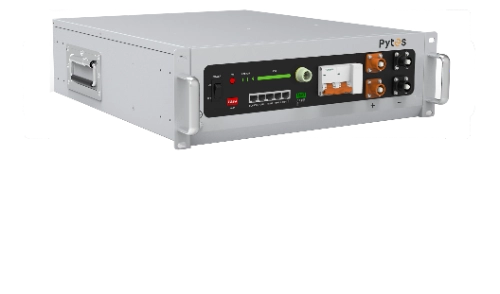
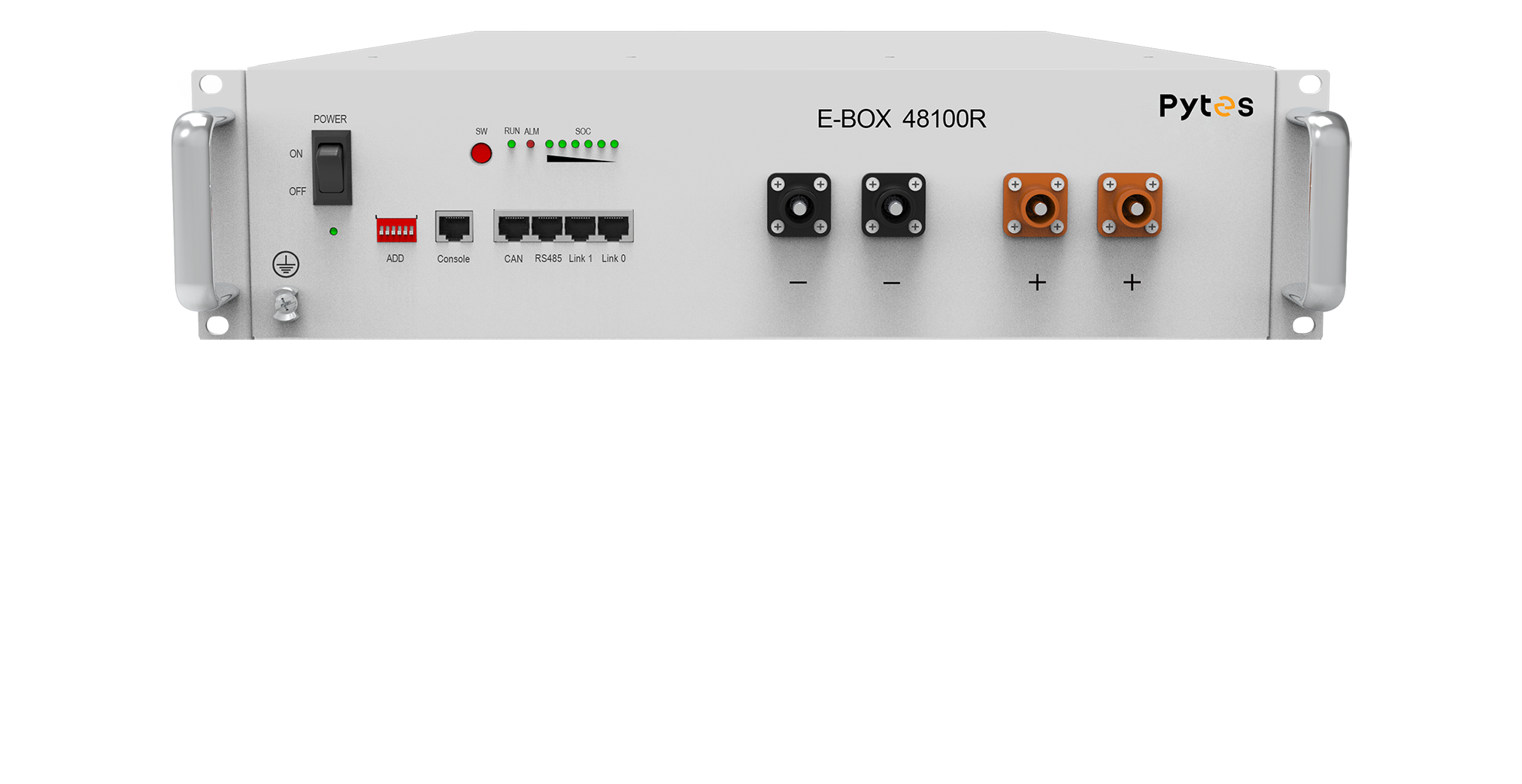
The Pytes E-Box 48100R is a lithium iron phosphate energy storage battery designed around a modular low-voltage architecture. Each battery provides a nominal voltage of 51.2V, nominal capacity of 100Ah and nominal energy of 5.12kWh.
The battery measures approximately 440 × 620 × 117 mm and weighs about 51 kg. Its rack-compatible format allows multiple modules to be organized into a compact energy storage system instead of requiring a separate standalone enclosure for every increment of capacity.
This modularity is particularly useful when replacing an existing battery bank or planning a solar installation that may require future expansion. Instead of sizing the entire system around a fixed battery capacity from the beginning, additional compatible modules can be incorporated within the supported system architecture as demand increases.
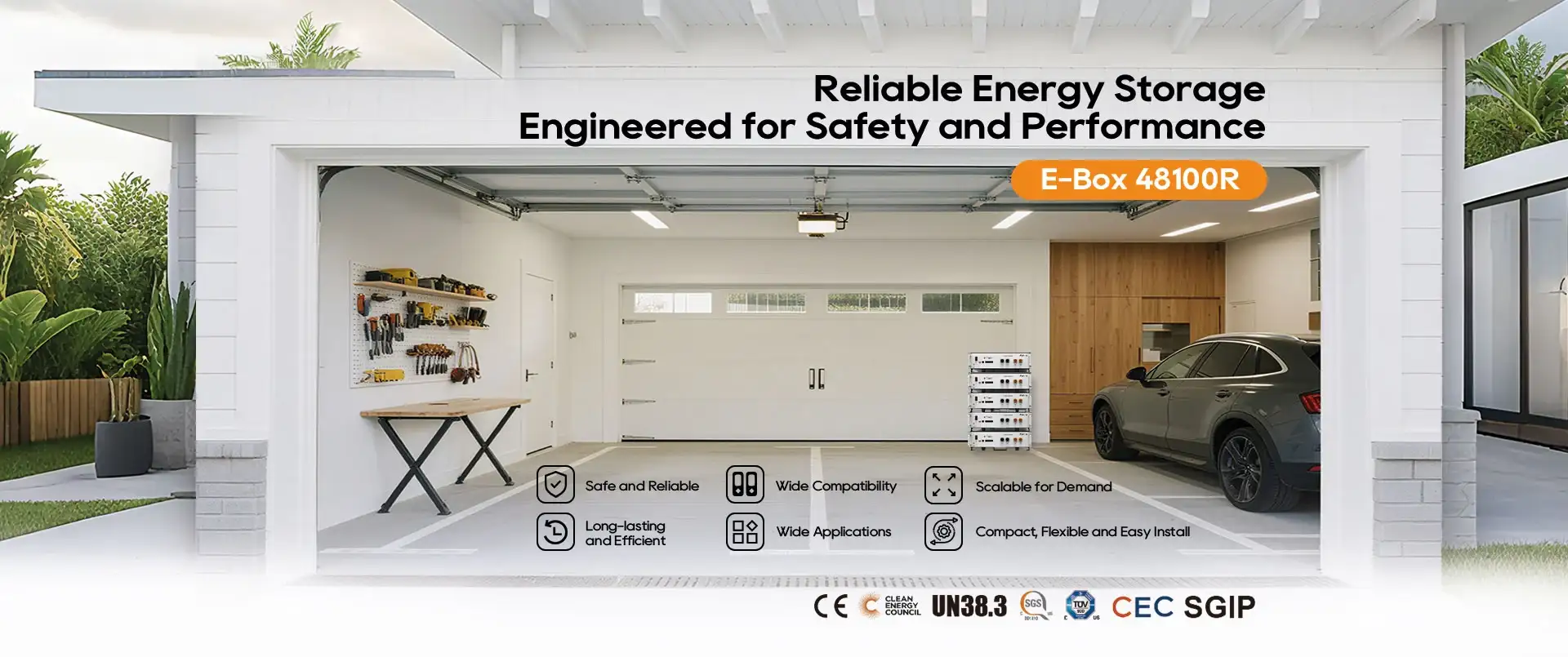
Pytes currently states that the E-Box 48100R platform can scale from 5kWh up to 492kWh when configured with the appropriate stacking architecture and Pytes Hub, with up to 16 batteries in one stack and a maximum of six stacks in a system.
For solar storage applications, this means the same battery platform can support anything from a relatively compact installation to a substantially larger modular system without changing to an entirely different battery technology.
Why Does the E-Box 48100R Work Well for Solar Energy Storage?
The value of a rackmount LiFePO4 battery is determined by how well its electrical characteristics, BMS, communications and mechanical design work together. The E-Box 48100R is designed specifically around these energy storage requirements.
5.12kWh Modular Capacity
Each E-Box 48100R provides 5.12kWh of nominal energy from its 51.2V, 100Ah configuration. This creates a straightforward building block for sizing a solar battery bank.
A single module may suit applications with relatively modest storage requirements, while additional modules can increase available energy for larger household loads, longer backup requirements or higher solar self-consumption.
This approach is particularly practical when electricity demand changes over time. An installation can be designed around current requirements while retaining the possibility of expansion within the manufacturer's supported configuration.
LiFePO4 Chemistry for Stationary Energy Storage
The E-Box 48100R uses lithium iron phosphate, or LFP, chemistry.
For stationary storage, LFP is widely selected where cycle performance and thermal stability are important design considerations. Pytes specifies a cycle life of at least 6,000 cycles under its stated 0.5C/0.5C and 25°C test conditions, together with a calendar life specification of at least 10 years.
Those figures should be interpreted under the specified test conditions rather than as a guarantee that every installation will produce identical service life. Actual battery longevity depends on operating temperature, depth of discharge, charge and discharge rates, system configuration and operating profile.
Integrated BMS and Communication
A modern solar battery cannot operate effectively as an isolated energy container. Communication between the battery and inverter is important for coordinated charging, discharging and system protection.
The E-Box 48100R supports RS232, RS485 and CAN communication protocols.
Its integrated battery management system manages the battery at module level and provides the control foundation required for integration into compatible energy storage systems.
When multiple batteries are installed together, communication between modules must also be configured correctly. Pytes' installation instructions specify inter-battery communication connections and master-battery DIP switch settings for multi-battery groups.
Practical Charge and Discharge Capability
According to the current Pytes manual, the E-Box 48100R has a standard charge/discharge current of 50A and a maximum charge/discharge current of 100A, with a specified peak current of 102A for 15 seconds.
These figures matter when matching the battery bank with an inverter. Battery quantity should not be determined only from the desired kWh capacity; the required power and current must also be considered.
A system expected to support significant loads may therefore require multiple batteries even when a smaller battery bank appears sufficient from an energy-capacity calculation alone.
How Does the Pytes E-Box 48100R Fit Into a Solar and Backup Power System?
The Pytes E-Box 48100R rackmount LiFePO4 battery can be integrated into an energy storage system where solar generation, inverter operation and battery storage are coordinated according to the application's energy requirements.
Store Solar Energy for Later Use
Solar panels frequently produce their highest output during daylight hours, while household electricity demand may continue into the evening and night.
A battery system allows part of that solar generation to be stored instead of being used only at the moment it is produced. The stored energy can then be made available according to the inverter and energy-management configuration.
This can increase solar self-consumption and reduce dependence on grid electricity when the system is correctly sized and configured.
The actual economic benefit depends on solar production, electricity consumption, tariff structure, battery sizing and local energy policies.
Add Backup Power Capability
When paired with an inverter and system architecture designed for backup operation, the battery can also form part of a residential or small commercial backup power solution.
The amount of backup time is determined by usable battery energy and the connected load.
For example, lighting, communications equipment and selected essential appliances have very different energy requirements from whole-home air conditioning, electric heating or other large loads. Battery capacity and inverter output should therefore be calculated together.
Simply installing more kWh does not resolve an undersized inverter, just as installing a larger inverter does not create additional stored energy.
Broad Inverter Integration
Inverter compatibility is one of the most important purchasing considerations for any server-rack-style solar battery.
The E-Box 48100R supports CAN and RS485 communications, and Pytes provides dedicated configuration resources for supported inverter integrations.
Rather than assuming that every inverter will operate identically, installers should verify the current compatibility documentation and required communication settings for the exact inverter model and firmware being used.
This is especially important for closed-loop communication, where the battery management system and inverter exchange operating information.
Flexible Rack, Floor and System Configurations
The E-Box 48100R platform is designed for flexible physical integration. Pytes documentation has described rack, floor and wall mounting options, while current Pytes system offerings include several enclosures and stacking configurations built around the battery.
For installers, the practical advantage is space management. Multiple battery modules can be organized into a structured battery bank rather than installed as unrelated individual units.
The final enclosure and installation method should be selected according to module quantity, environment, electrical requirements and applicable installation codes.
What Should You Check Before Choosing the E-Box 48100R?
The Pytes E-Box 48100R rackmount LiFePO4 battery is a flexible storage platform, but correct system design remains essential. Battery capacity, inverter compatibility, installation environment and future expansion should be confirmed before equipment is purchased.
Calculate Energy and Power Separately
A common battery-sizing mistake is looking only at kWh.
Energy capacity determines approximately how much energy can be stored, while power requirements determine how quickly that energy must be delivered. A household requiring several hours of moderate backup power has different battery requirements from one that needs to operate several high-power appliances simultaneously.
Installers should calculate both expected energy consumption and peak power demand before deciding how many E-Box 48100R modules are required.
Verify the Exact Inverter Configuration
Do not select an energy storage battery based only on nominal voltage.
The exact inverter model, communication protocol, firmware and system settings should be checked against current Pytes compatibility and configuration information before commissioning.
Pytes provides configuration guidance for specific inverter combinations, which can help installers correctly establish battery-to-inverter communication.
Check Installation Temperature and Location
Battery location affects long-term system performance.
The current E-Box 48100R manual specifies a charging operating temperature of 0°C to 45°C and a discharging operating temperature of -10°C to 50°C.
Installation planning should therefore consider ambient conditions, ventilation, equipment spacing and the requirements stated in the current product manual.
The battery should always be installed by appropriately qualified personnel following manufacturer instructions and applicable electrical and safety regulations.
Review Certifications for the Target Market
Certifications and listings are especially important for energy storage products because requirements vary by country, jurisdiction and complete system configuration.
The current Pytes manual lists certifications for the E-Box 48100R including UL 1973, IEC 62619, CE, UN38.3, UL 9540A and UL 9540.
Buyers and installers should verify the current certification documentation for the exact product revision and confirm which requirements apply to their specific project and jurisdiction.
Plan Expansion Before Installation
One advantage of the E-Box 48100R is scalability, but future expansion should still be considered during initial system design.
Rack or enclosure capacity, cabling, busbars, protection devices, inverter capability and communication architecture can affect how easily additional batteries can be incorporated later.
Planning these elements from the beginning can make future expansion substantially easier than redesigning the complete battery installation after energy demand has increased.
Conclusion
The Pytes E-Box 48100R rackmount LiFePO4 battery combines 5.12kWh modular capacity, LFP chemistry, integrated battery management and flexible system expansion in a format designed for modern solar and backup energy storage.
Its strongest advantage is not a single specification. It is the ability to build a storage system around actual energy demand and expand it as requirements change. For battery replacement, solar self-consumption, backup power or a new energy storage installation, the E-Box 48100R provides a practical foundation when it is correctly matched with the inverter, load profile and installation environment.
For installers, distributors and energy storage buyers, the next step should be to define the required kWh capacity, inverter model, peak load and expansion plan before selecting the final E-Box 48100R system configuration.